Monthly Archives: April 2013

Try!

“Sometimes, you just gotta jump in with both feet and try your best.”

I was in over my head at work again today.  Fortunately when I got home, I saw this from my friend Tom (spoiler- contains adult language, but will make your day). Click the link, it’s the point of the post…

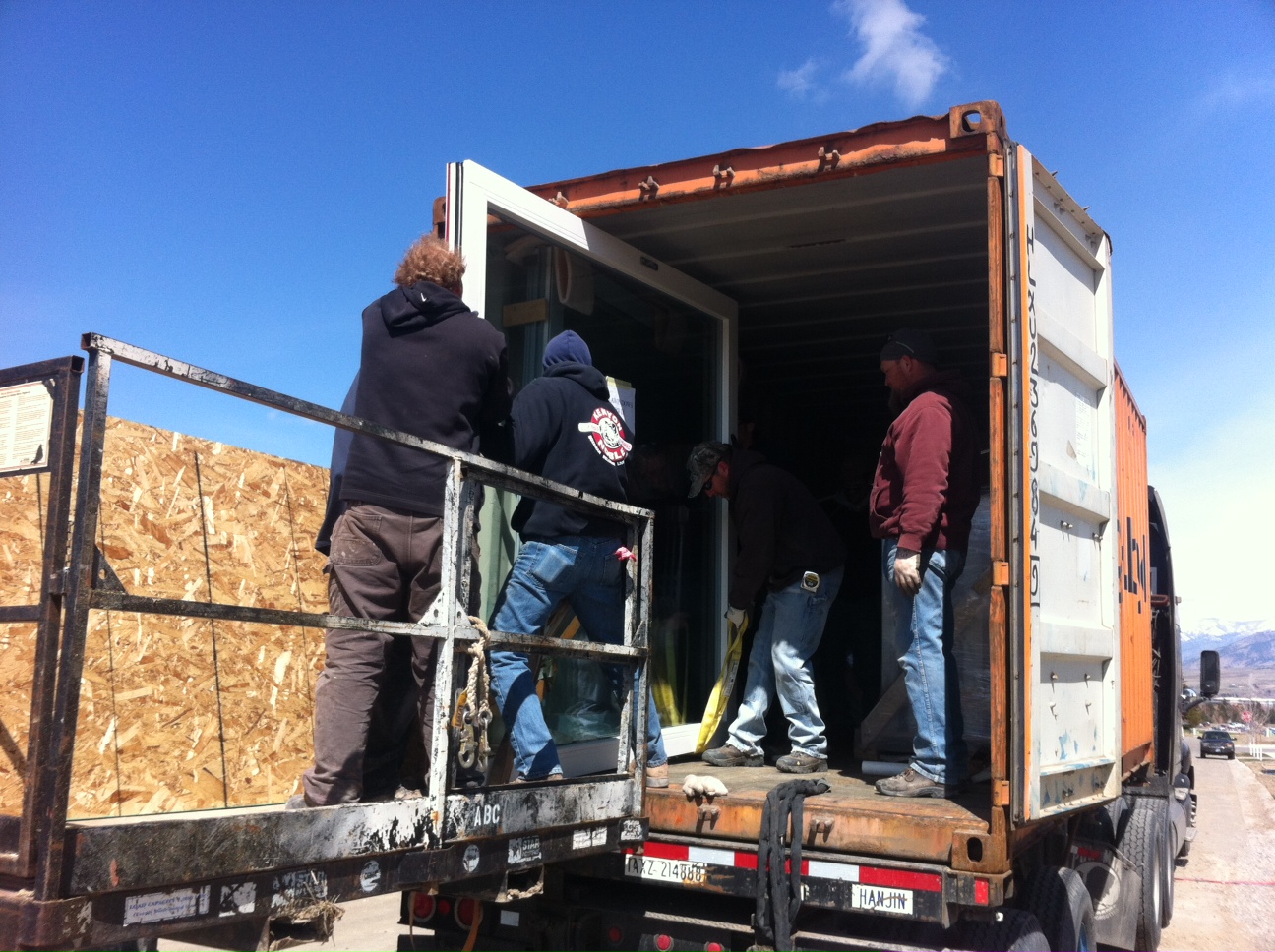
Planning and organizing and teaching people about 700lb windows from Poland is hard, especially when you are 200 miles from home.

unload Zola windows

So difficult it was comic.

Huge props to the Dave and the crew at Chase Skogan Homes. Back to adventures soon.

Reaching for Home

I went to my first ever city council public hearing tonight, because it mattered. I’m pleased to say that I was there to witness the Missoula City Council adopting a 10 year plan that targets the end of homelessness. I didn’t bring prepared comments, but found myself at the podium anyways.  While I enjoy public speaking, tonight was not one of my better performances.  I came home and organized my thoughts more coherently.

To the Missoula City Councilmen&Women

“As we talk about long-lasting affordable housing, I feel compelled to talk about long-lasting affordable buildings. Worthy visions of affordable housing solutions have time and time again been implemented as low-cost construction projects resulting in housing that is of low value to both the occupants and the surrounding community.

Montana state codes are deficient in addressing ventilation standards that support occupant health, these codes do not reflect the modern state of energy efficient design and construction (leading to high energy bills for occupants), and these codes do not encourage the use of sustainable, durable materials.

As a contractor, I am certain that we can do better.  I urge you to forego many of the often repeated assumptions in building design.  Challenge your working group, design teams, and fundraising teams to strive for more than code minimum construction. Consult with design experts that truly believe in your goal of sustainable housing, and have demonstrated it in their own work. Developing cost effective, durable, and low energy use buildings demands rigorous dedication to these goals, from the beginning of the fundraising process to the moment we hand keys to a tenant. I believe that sustainable buildings are instrumental in providing sustainable housing. I am proud to be part of the the community that is willing to take this on, and eager to help see this vision through.”

There it is.  Let’s get to work.

Rent

(the views below are my own, and are no way professional opinions or necessarily the views of my employer)

Yesterday I signed a lease on a new place to rent for the next year. 2013-2014 will be another year that owning the space I live in eludes me. Several friends though, have made this the year and know that I have opinions about their position. I haven’t bought a house. There’s a huge amount on the internet that covers this topic. Several friends have requested this post repeatedly of late. I wanted to share the top three things I’ve thought about digging into their questions from the perspective of a contractor, engineer, and fiscal tightwad.

Track Your Money.

Use Mint.com. If you can’t say exactly how cash positive you were in the last 6-12 months, you’re probably not ready to buy a home.

Learn About Mortgage Finance

Make sure you understand exactly how much money a bank is about to extract from you. Spend an hour on the Wolfram Alpha Mortgage Calculator and write down what you learn.  This is going to determine how much house you can actually afford. The number one headache I see clients struggle with is being unrealistic about what they can afford for both new buildings and additions. Don’t buy more house than you can afford.

Look Around Carefully

People will tell you all kinds of things, and NOT tell you all kinds of things. There are three things that are a barrier to doing other (more fun) energy efficiency improvements down the line. Here’s what I look for:

  1. Look for white PVC pipes sticking out of the furnace and hot water heater- this is the sign of a “sealed combustion” appliance.  These are more efficient than code minimum systems, but more importantly they are much, much safer. The first step in doing any other energy efficiency work is having sealed combustion systems. Learn more about the relationship between energy efficiency and combustion appliances here. Even in brand new houses, speculative builders will still prioritize granite counter tops over seal combustion appliances.
  2. Look around the crawlspace. Crawlspaces are prime sources of mold, mildew, and radon, as well as energy loss.  They are expensive to retrofit, and again are more pressing than doing other sexier improvements. You are looking for plastic on the floor that is sealed to the foundation wall.  Look at the foundation wall and make sure that it is solid, smooth concrete.  I would not buy a house with a rubble foundation, or a crawlspace that I wouldn’t be willing to crawl to the outer extents of.
  3. Look (and listen) for a dedicated kitchen range vent, and a functional bathfan in each bathroom (be prepared to negotiate several thousand dollars out of the purchase price). If the fans whine like your 1985 Corolla driving up the mountain, it’s probably not working right. Dedicated ventilation does increase your energy bills, but it reduces the risk of ending up with a mold or mildew problem in your house. Even better, look for a house with a heat recovery ventilator. Again, having a functional ventilation system in the house will give you more options down the line to make other improvements.

The Energy Vanguard blog is one of the best contractor perspectives on the internet.  While it does focus on energy use, Dr. Bailes covers a wealth of knowledge and experience. Set aside a Tuesday night and just start reading.

I hate to bang this post out, but it’s the weekend in the spring and people are shopping.  Happy hunting.

Stars

A few weeks ago I made a goal to sleep under the stars more. Last weekend Sarah had a great idea for just the place to do that.  I made it to Salt Lake City by Thursday night, and Friday we headed promptly for Zion National Park.

Kolob is the name of the star that Mormons believe that God lives on- it’s also the northern part of the park. If I were God, I could see living here…

Opening views.

Opening views.

Drive the WHOLE overlook road...

Drive the WHOLE overlook road…

Hiking Friday afternoon was stellar, but the camping just outside the park was stellar.  Red sand, bright stars, and dinner par none. We talked about what we might do, and while Zion is famous for rock climbing, I can do that at home.  Technical slot canyoneering, not so much…

Lets go.
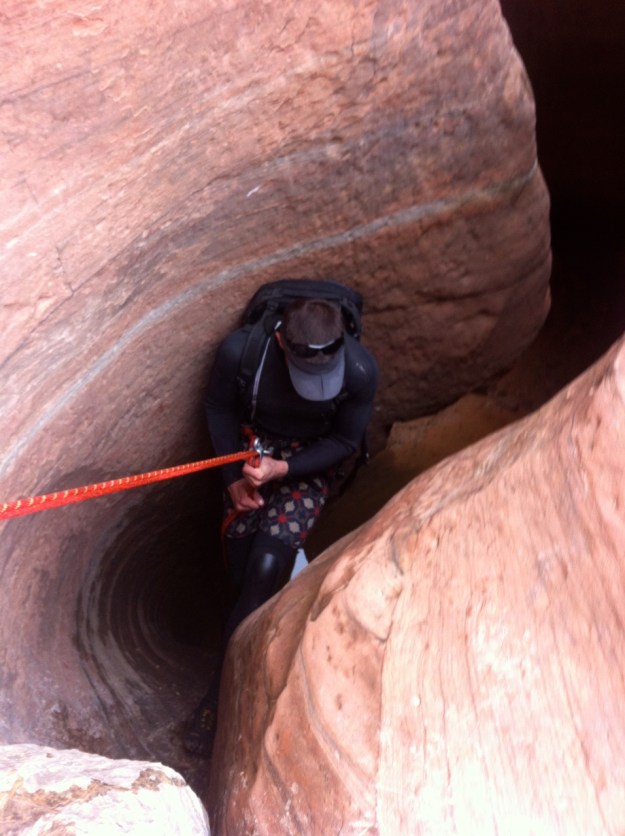
Lets go.

Going down.

Going down.

Lead on!

Lead on!

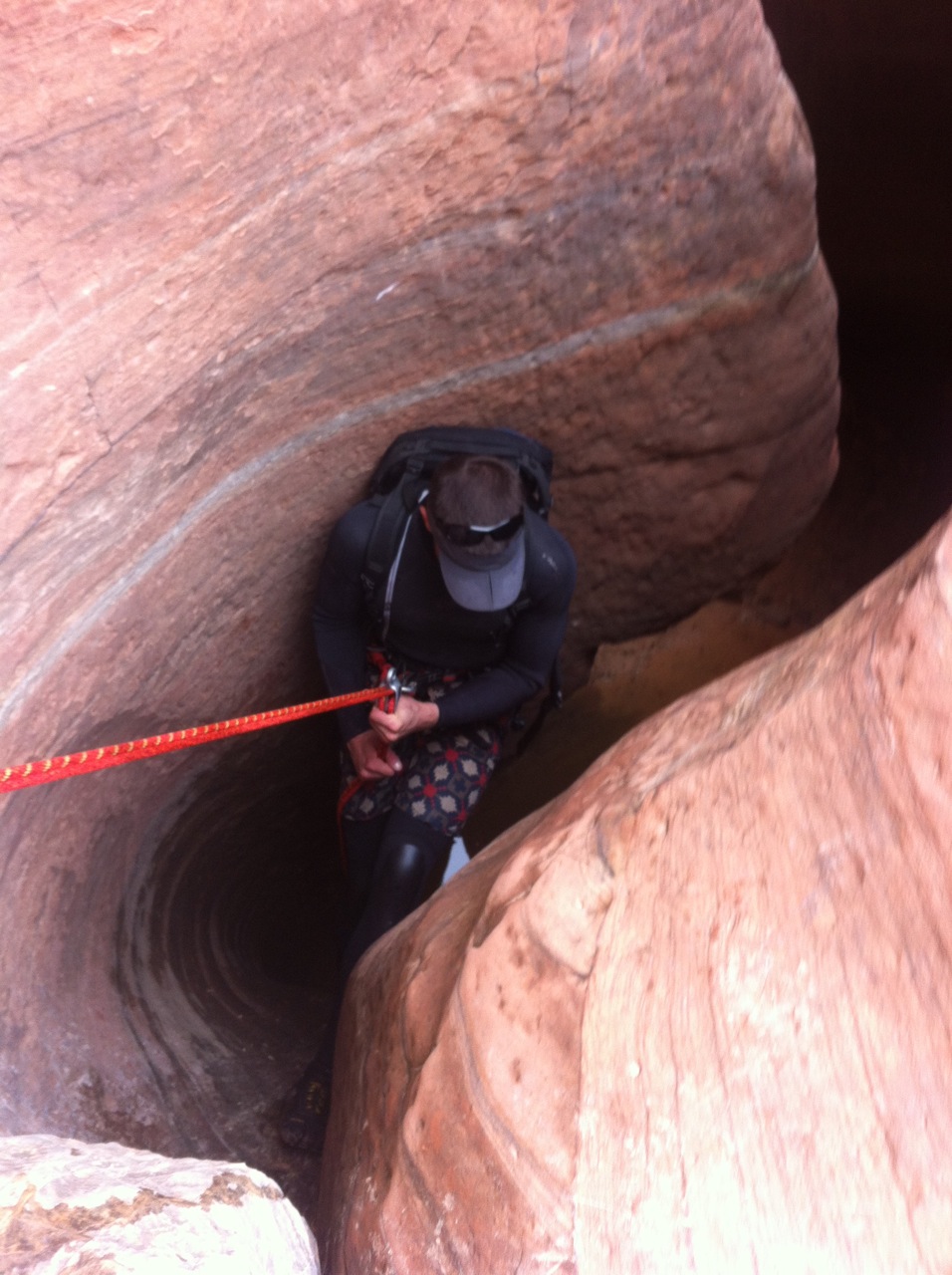
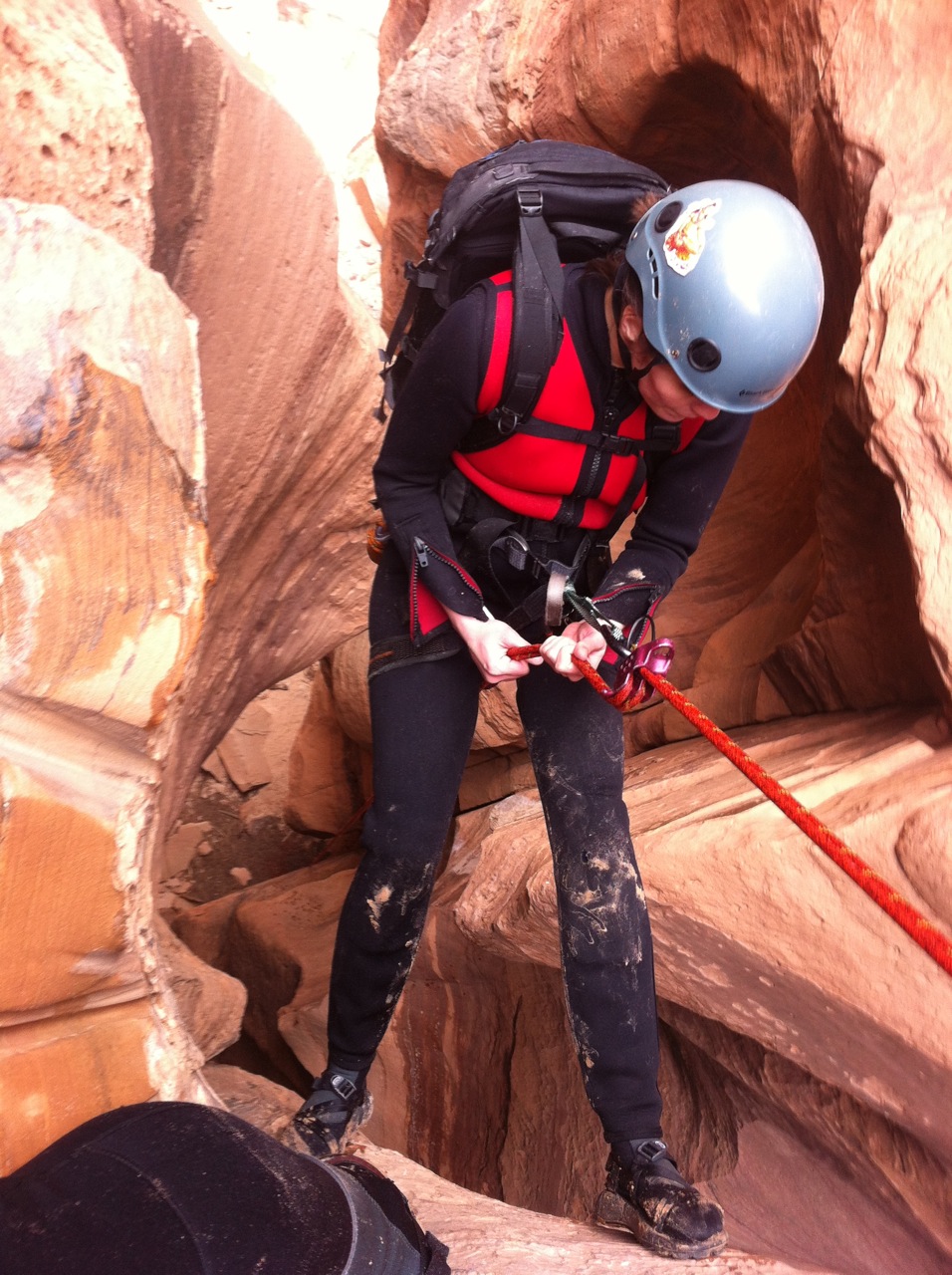
We headed down the famous Keyhole Canyon- which is pretty much everyone’s first Zion canyon, and while short, it had all the right elements.  That is, the right elements to make you want more.  So we jumped in Pine Creek next.  More of everything, including full on darkness and free hanging rappels.  So, so good.

Ready to be cold.
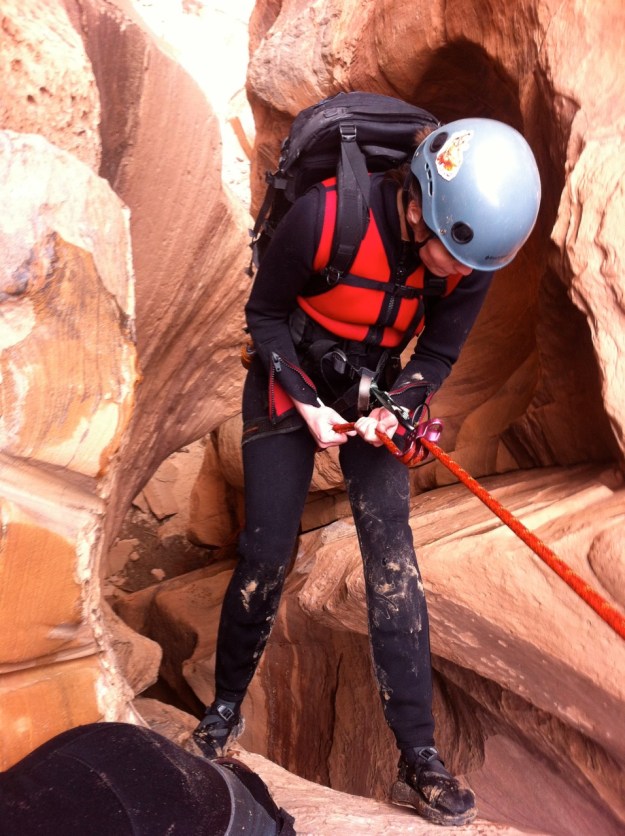
Ready to be cold.

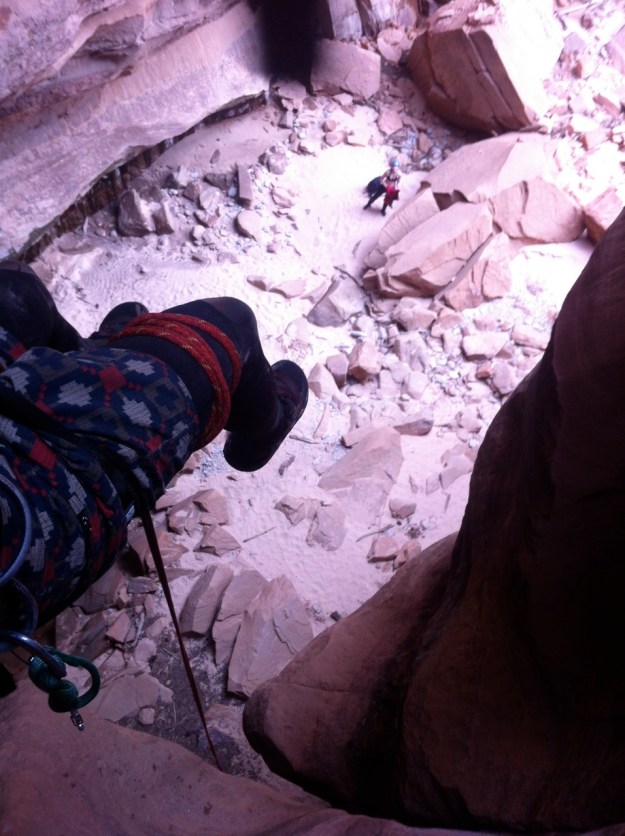
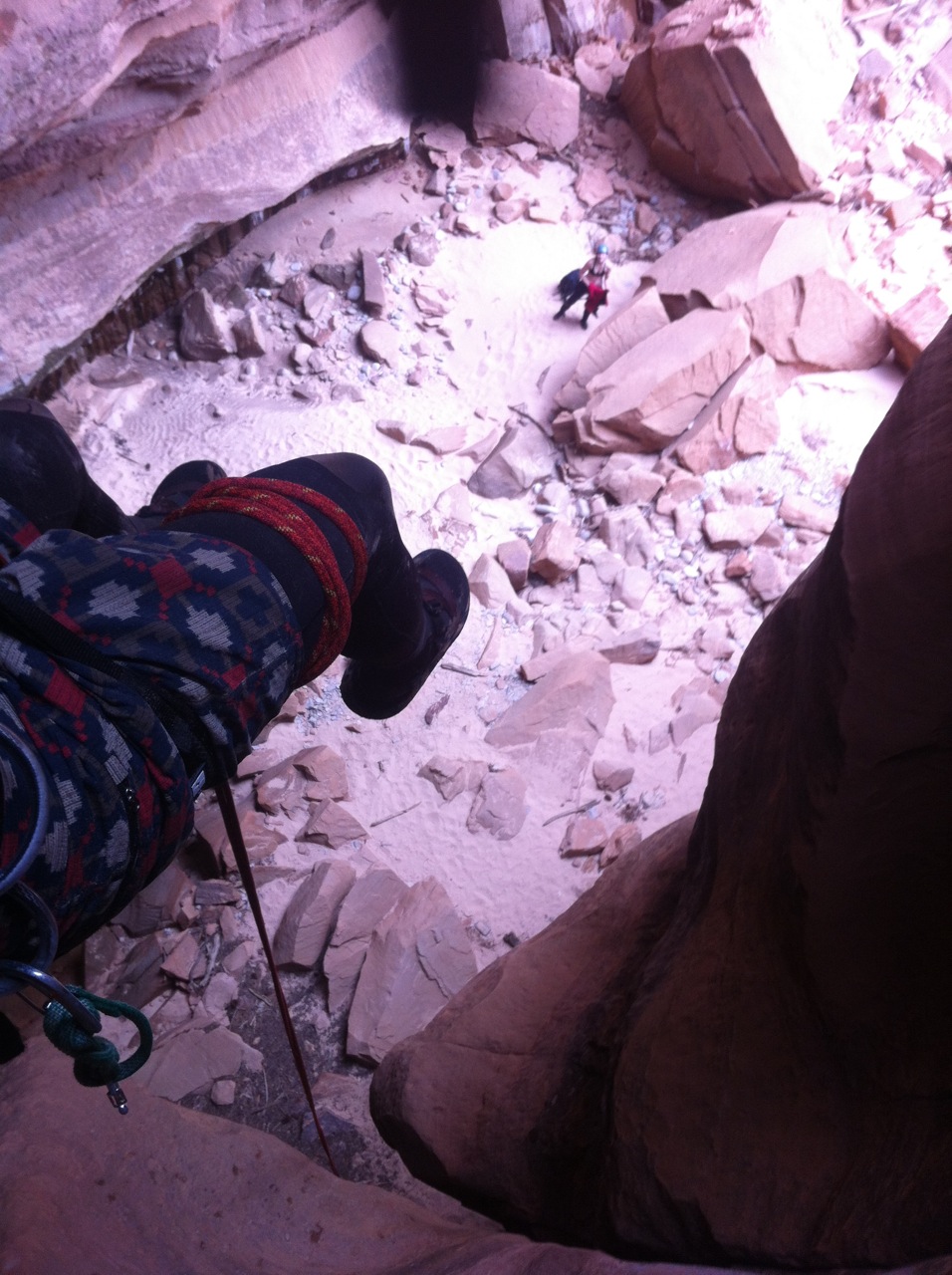
Last rappel- 100' free hanging...

Last rappel- 100′ free hanging…

Mid-air photos.
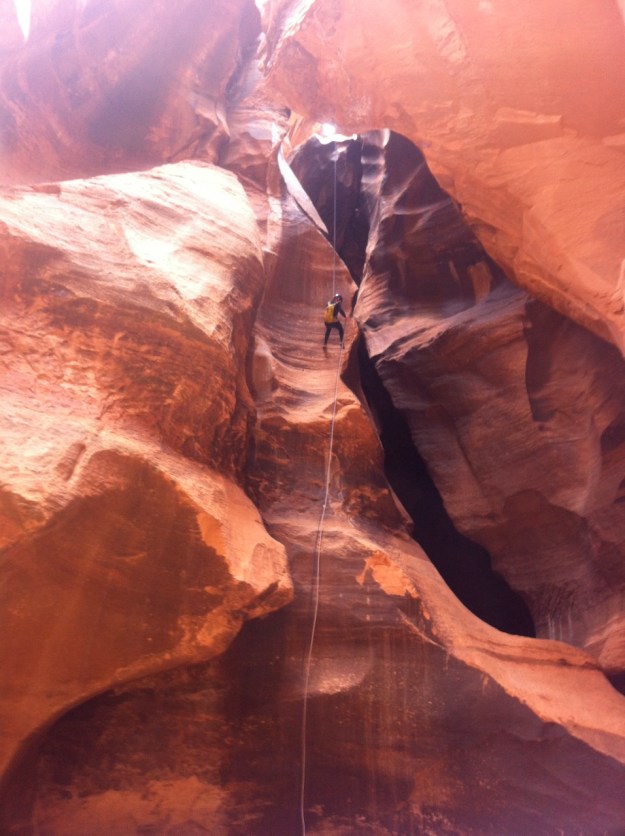
Mid-air photos.

Our new friend Taylor following after us...

Our new friend Taylor following after us…

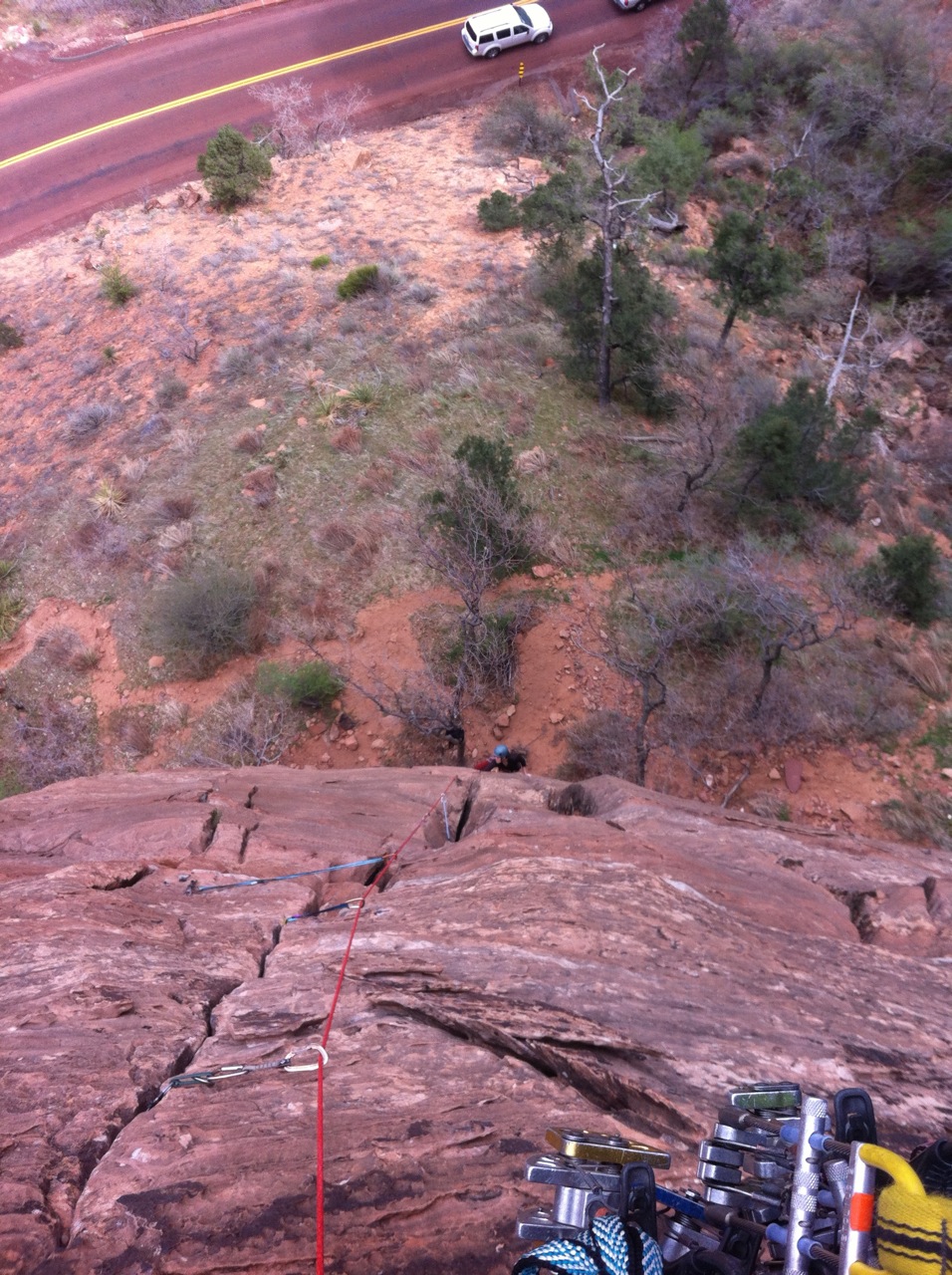
Despite my new found love of canyoneering, it seemed criminal to go all the way to Zion and not rock climb, so after a leisurely Sunday brunch we headed out for a few easy pitches before heading back to SLC.
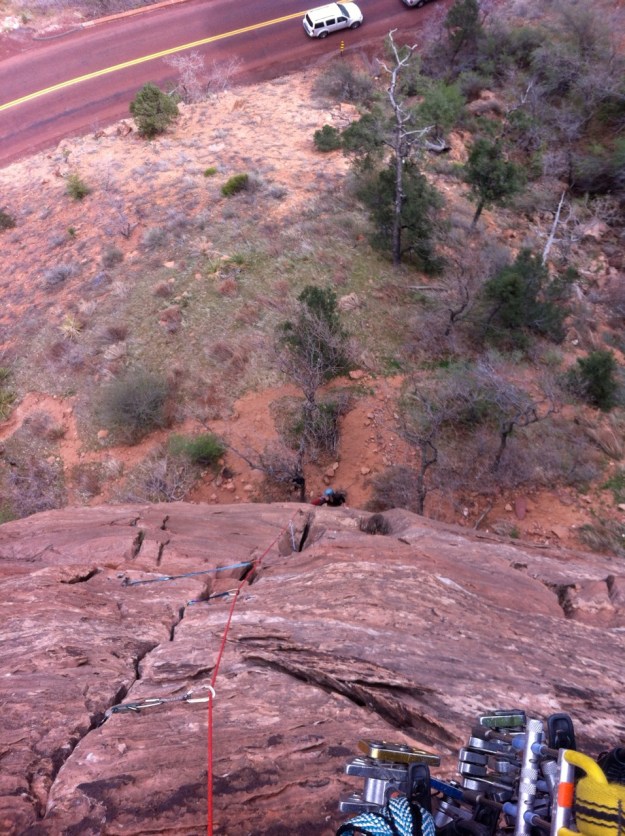
Putting the crack machine to good use.

Putting the crack machine to good use.

Amazing views from the belay...

Amazing views from the belay…

The verdict?  I had a stellar weekend.  I like sandstone, I like canyons, I like traveling, and I like this girl.  Life seems pretty good that all these things fit together.

Ps. I got to hang with my buddy Bryce in SLC who is starting a rad new thing to bridge the gap between gearheads and dirtbags- check it out.

Crack Machine

A few weeks ago I was desperate to climb outside, but didn’t plan for it and needed to spend most of my day taking care of things around town. It was gorgeous out, and I was unwilling to head to the gym. I’m trying to focus on training like I hope to climb, and had had one idea kicking around for a while.

Trad climbing almost always entails some form of crack climbing, and I am not terribly good at either.  The rock gym is relatively useless for training towards crack climbing, so I took a lead from one of my favorite climbers and built a little tool for the specific exercise of  learning to cram my fingers into rock fissures.  Welcome to the crack machine:

IMG_8117

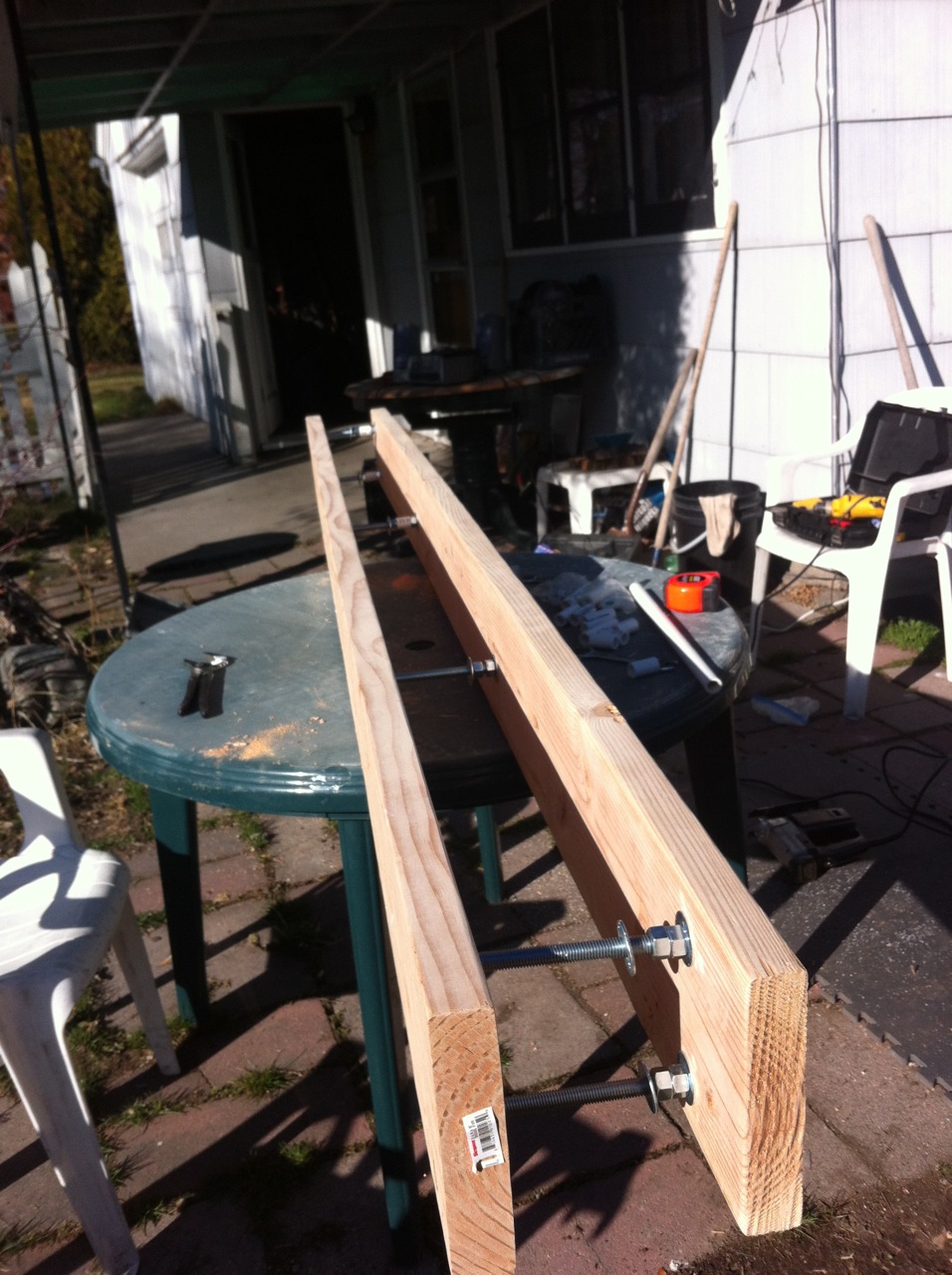
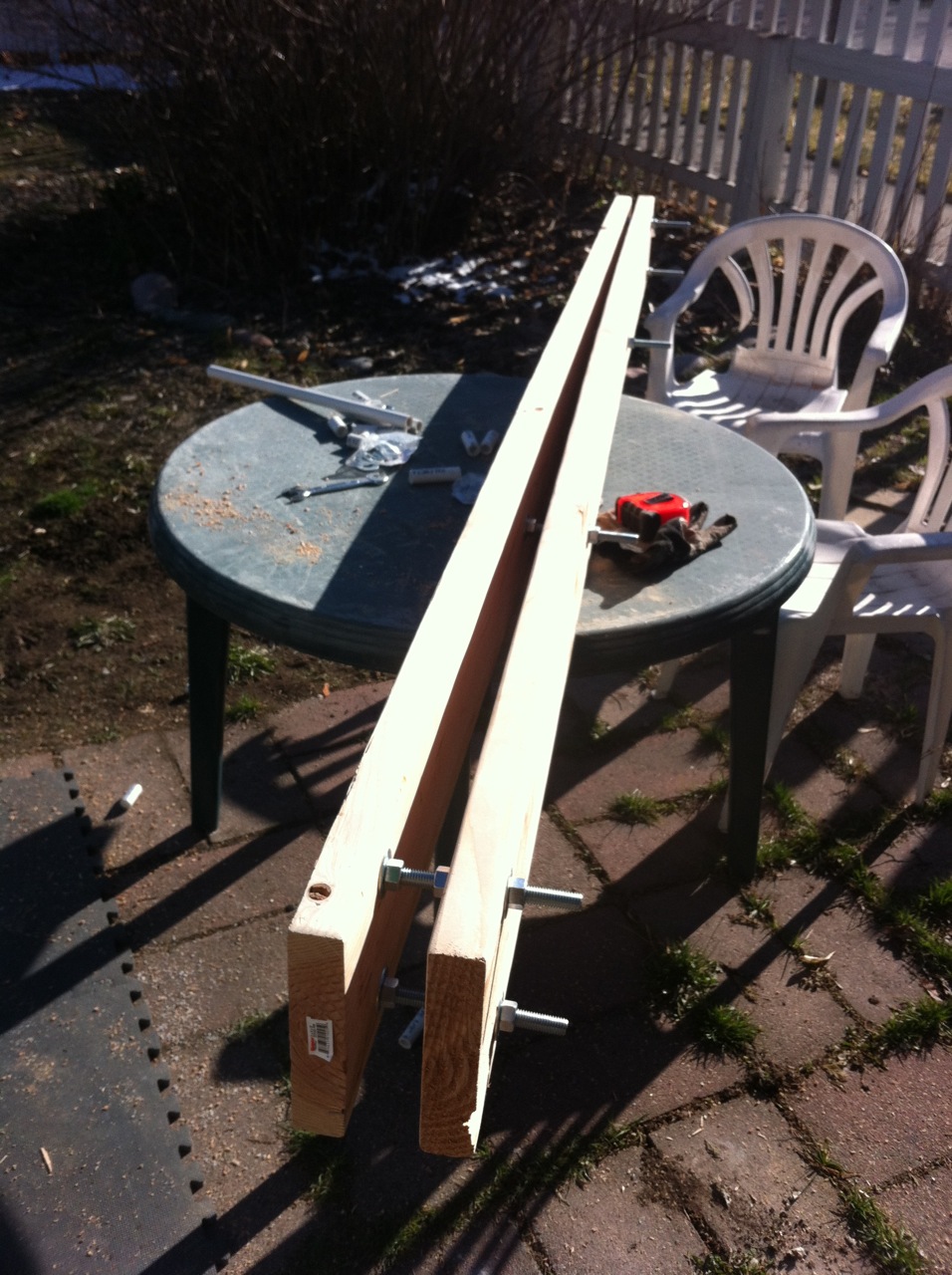
(2) 2×8’s, sanded smooth on one side and one edge.

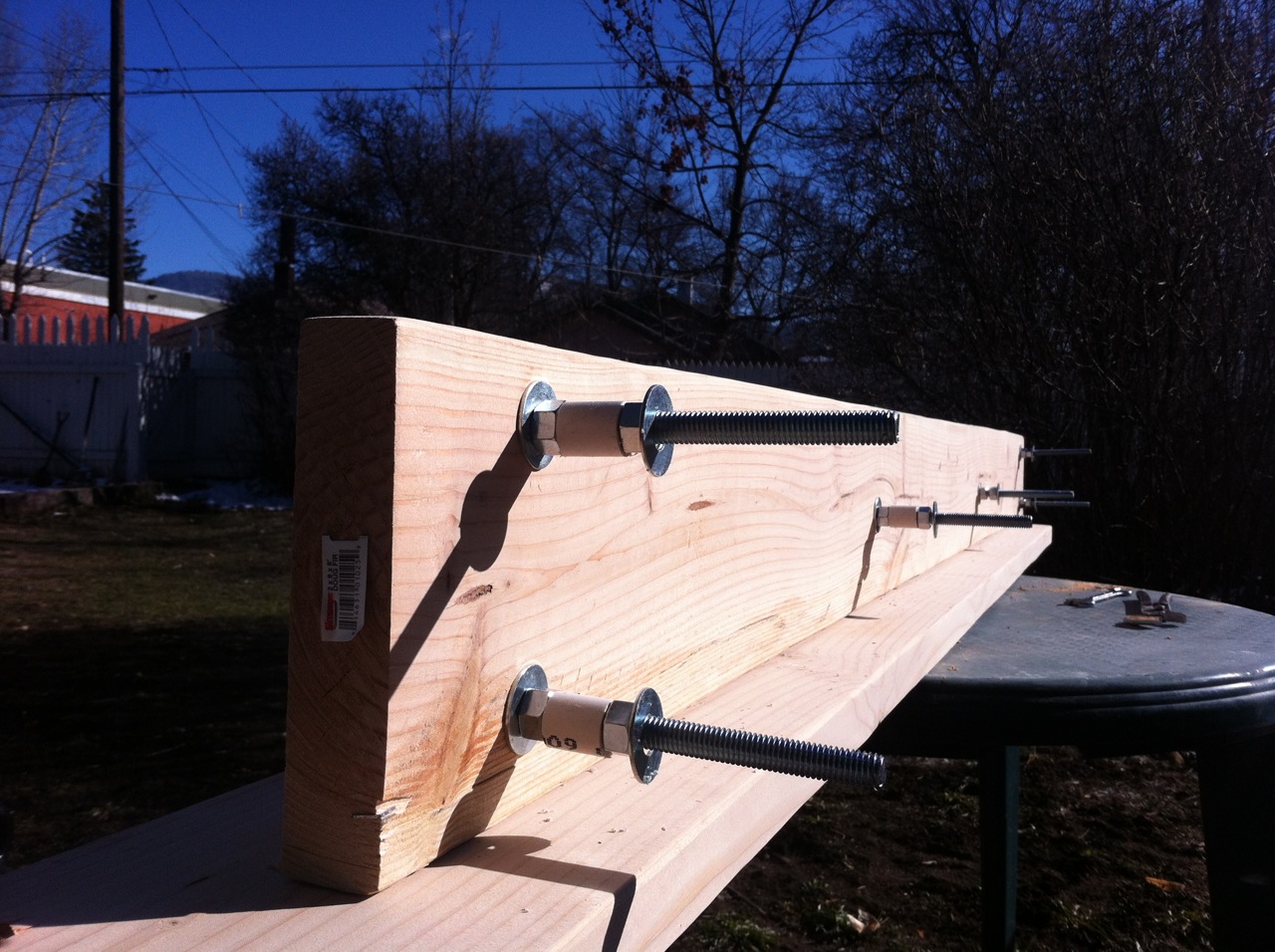
Using carriage bolts and PVC pipe for spacers makes this set up adjustable.

Using carriage bolts and PVC pipe for spacers makes this set up adjustable.

I used 2x8s, carriage bolts, and pvc pipe as spacers to make the system adjustable- meaning I can work any size crack. The size of lumber matters quite a bit- I would have like to use 2×10 or 2×12 so that I can practice armbarring and chickenwinging but they would have been too heavy to lift.

Clearance holes required.

Clearance holes required.

One big note on the building side- the holes in the board on the left, above, need to be ~1/8″ to 1/4″ larger than the holes on the right.  Carriage bolts don’t tend to sit perfectly straight, so you want some clearance to get things to fit together nicely.  Using carriage bolts and nuts allows you to crank the boards apart to any width crack- mine is currently set to “rattly fingers” or “BD 0.75.”  You don’t actually need the PVC spacers, I just thought they would add some rigidity which really wasn’t necessary with six carriage bolts in 8′

Ready to hurt?

Ready to hurt?

For the record- these guys crush it, and they trained almost exclusively in a basement. Look forward to updates on how training is going.