Monthly Archives: July 2011

Part 3, Karstens Ridge

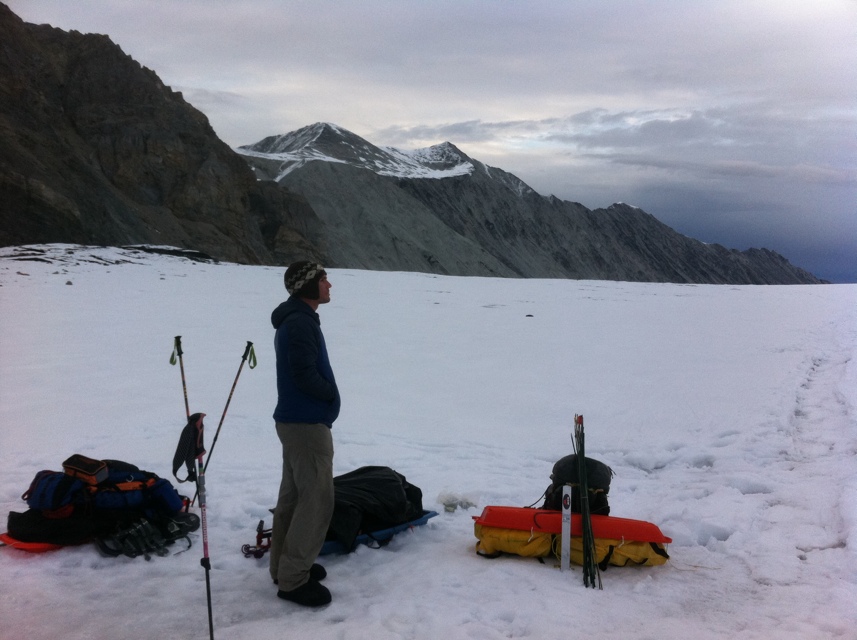
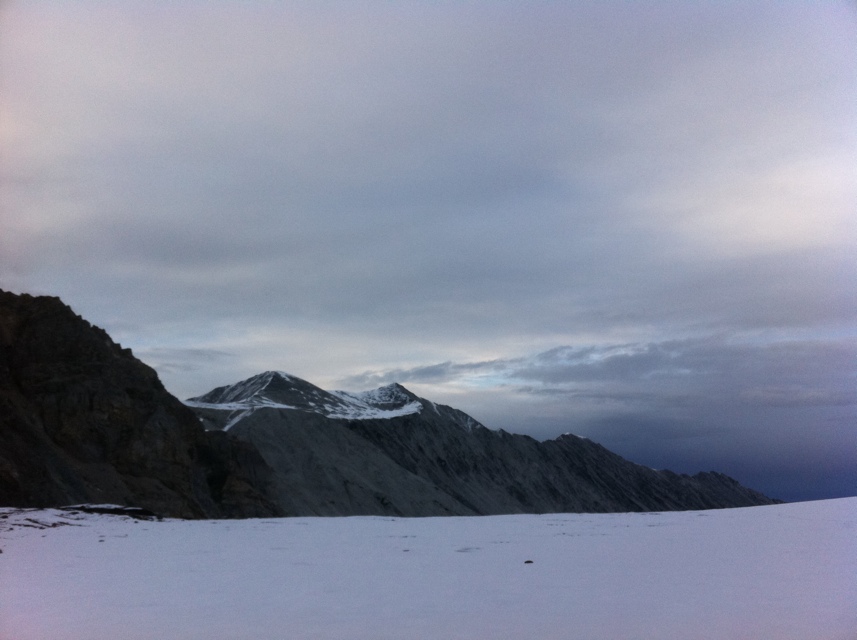
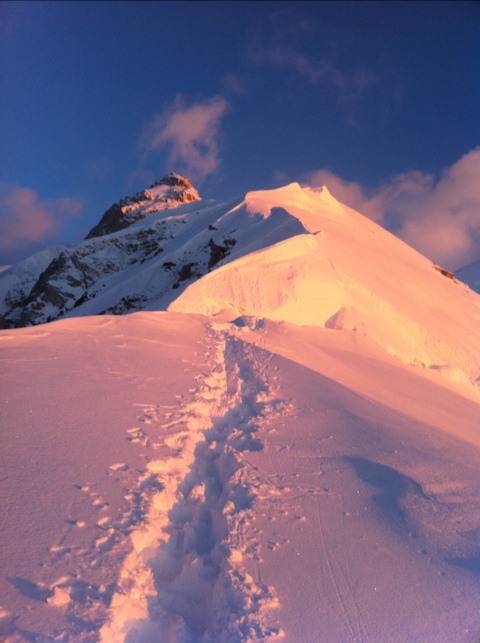
After the Great Icefall, the Muldrow glacier technically ends in a large bowl below a massive jumble of ice- the Harper Icefall looks like a giant alligator waiting to eat you. Fortunately the mountain provides gorgeous detour around this feature by following Karstens Ridge for approximately 3,000 vertical feet just east o the Icefall. This ridge is arguably the most beautiful and engaging climbing of the route.
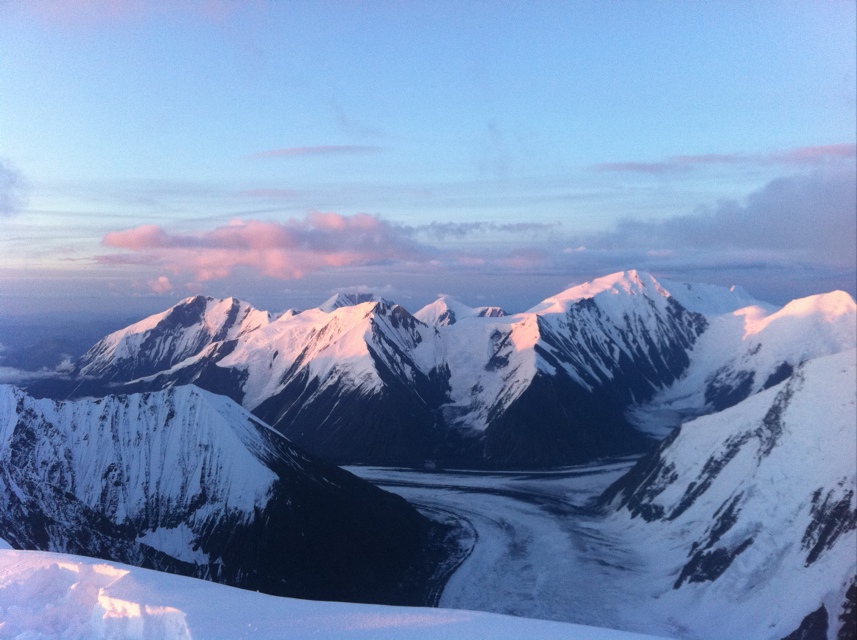
June 23 we carried most of our food and fuel to the base of the ridge at 10,800′ and scoped a plan to get on the actual ridge (one of the hardest parts). June 24 we packed up camp in good weather, gained the ridge, and built a new snow camp at 12,100′, passing our cache below us. We knew there was some hazard in leaving an avalanche slope between us and our cache at 10,800′ but we wanted to take advantage of good weather, and felt like the short gap between us would be doable in most conditions. The 12,100′ camp is likely the most beautiful place I have ever camped, and offered views above most of the surrounding peaks.
As might be expected, June 25 saw us hunker down for our first weather day (hard blowing snow and low visibility) loading the avy slope between us and most of our food. We had enough to wait two days, but I wasn’t impressed with my response to the first real threat of food stress. We decided to scope out conditions on June 26, and spent a long 11 hours very carefully mitigating avy hazards to get our cache up to the ridge camp that evening.
Also at 12,100′ we caught up to a large team from NOLS, and a 3 person team from Massachusetts both whom had left about a week before us. It seemed a little funny to have 3 teams on a remote wilderness route all stuffed into a small ridgetop camp, but it was fun to share the experience with new faces.
NOLS had already broken a trail up the ridge for us, so June 27 we moved a cache to 13,600′ on the ridge and returned to camp. The terrain on the ridge was steep and exposed, normally this wouldn’t have been a problem but with a huge pack I felt unsure of myself. That night we met a fourth team at 12,100′- two Russians that had started two days after us and were moving quite fast, and something triggered our suspicions.
June 28 we broke camp and moved up to Browne Tower, a huge granite feature at the top of Karstens Ridge, along with all of the others teams. Campsite space here is limited and building camp was extremely laborious- NOLS got out of camp first and grabbed the best spots for their huge crew. I went to bed worked, but excited to be high on the route at 14,600′. June 29 we took it easy and retrieved our cache from 13,600′ and absorbed being truly above the clouds within direct sight of both Denali summits.
20110706-034647.jpg

20110706-034636.jpg

Part 2, Muldrow Icefalls

When the path of a glacier flows over a particularly steep piece of a mountain it forms a feature called an icefall. Typically these areas host many cravasses, huge broken chunks of ice, and terrain that makes travel both difficult and scary. The standard Muldrow route includes travel directly through 3 major icefalls, and based on my recent cravasse fall experience, these were somewhat the mental crux of the route for me. Icefalls tend to change from year to year, storm to storm, and temperature when traveling in them.
The Lower Icefall of the Muldrow was the first of the three icefalls, and the one in which we had the heaviest loads to carry. For a variety of reasons, I elected to use tele skis and skins for floatation on this trip partially because they do a better job of keeping people out of cravasses than snowshoes. Unfortunately, they make traveling throughout the dense broken terrain of icefalls much more difficult, especially while pulling a sled. We found a partial trail left by previous parties but it still took quite some work to navigate. Due to the difficult terrain and size of our loads we started double carrying, spending one day carrying a cache higher on the route (through the icefall), then returning to camp the night and moving our tents and other gear the next day- if it sounds like it makes the climb twice as much work, you’re right, it does. It also makes the experience workable rather than unbearable, and I found it allowed me to enjoy the incredible place we were in. This is a typically strategy for most teams and most of the route until reaching the Harper glacier at 16,000′, so we had lots of work to do. The Lower Icefall went smoothly, no falls or other surprises, but we ended up caching our gear earlier, below the hill of cracks, rather than the base of the Great Icefall as is typical. When we moved camp from below the Lower Icefall we decided to move past our cache and through the Great Icefall with lighter packs and hopefully finding better camping at approximately 10,000′.
The Great Icefall of the Muldrow also went smoothly and without surprises, but was a pretty spooky place to be none the less. Home to some of the wildest and gnarliest ice formations I have ever seen, it is a feature to respect and move through (and yes we double carried through it). Again previous tracks help point us in the right direction, and we were stoked to dig into flat, safe camping once we got uphill of the Icefall. Travel and weather conditions through both of these Icefalls varied from perfect to terrible, but being on a night travel schedule helped make them somewhat more predictable. If doing the route, expect anything from brutal cold to uncomfortably warm temps, sticky/gloppy to styrofoam snow, rain and snow precipitation, whiteout to clear visibility- the full gambit, during this portion. We got it all in four days. Night schedule is recommended as it makes snow bridges over cravasses more stable and temperatures easier to predict. Skinning throughout the Icefalls was some of the most difficult and frustrating time I have ever spent on skis- I would actually recommend snowshoes for the route because of their lighter weight and better mobility. As we had passed our cache in a big push to camp above the Great Icefall, we returned the next night to retrieve it, I led our team back up the track pulling amsled and heavy pack into a cold down glacier wind. I don’t think my hip flexors have ever worked so hard and it seemed like this last carry through the most difficult of the 3 Icefalls provided our team with the first opportunity to truly suffer together. Suffice to say I was very grateful for the mental training provided in my sessions at Crossfit Fort Vancouver, and mental strength of my teammates. We earned our hot drinks that night.

Rocksteady and Bebop

(from June 19th, 2011)
When I moved to Portland four years ago I was just learning to be an adult- sorting out challenging circumstances and defining myself in a new city and new position in life. A friend of mine had this title phrase posted on his instant message status and the two words were exactly what I needed to think about. Steadiness, making good decisions on good information, slowing things down, and embracing adversity helped sort out the mayhem. Bebop, a music that I grew up playing, involves creativity, energy, and intelligence- all qualities I wanted to make sure I had in my newfound west coast life. I only found out some time later that my friend was referring to two thuggish characters from the Teenage Mutant Ninja Turtles.
Ever since, the phrase has reminded me of the petty drama I entertained during that period of my life and exactly how to beat it. Hauling a heavy pack and heavier sled up a glacier there’s a lot of funny stuff that can get in your head because you are worked. Planting each step and humming a little jazz reminded me how to finish a strong day, rocksteady and bebop.

20110701-042501.jpg

Part 1, Wonder Lake to the Lower Icefall

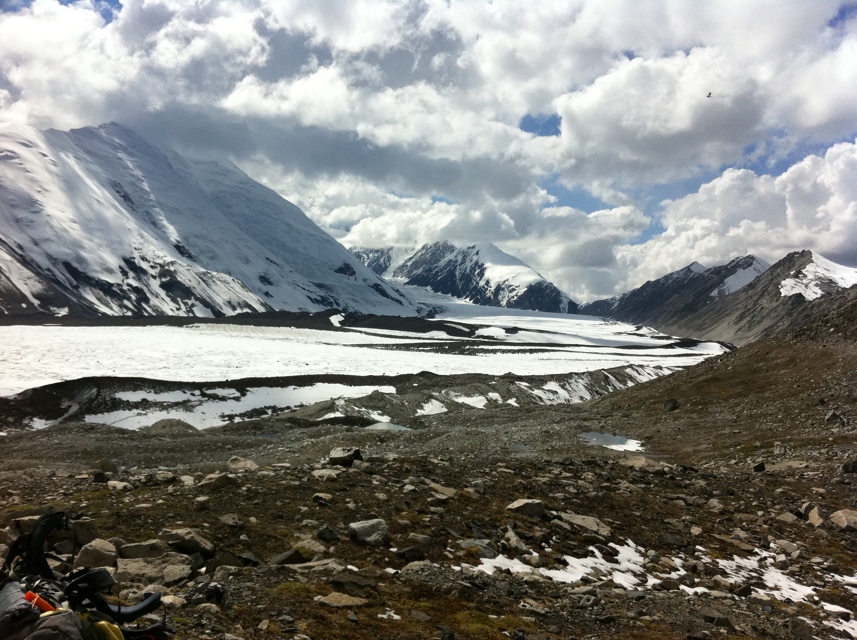
At 34 miles, the Muldrow glacier is the largest glacier on the north side of Denali National Park, and hosts the route that was used by the first successful attempt to climb the mountain. In every sense, the route is a true Alaska adventure, a massive undertaking involving a variety of physical and mental hazards in a truly remote wilderness setting. It was a privilege to be invited to patrol the route as part of a national park service team and an opportunity to complete a lifetime goal. Unlike typical Denali park service mountaineering patrols, we had a minimum of support and climbed the route with a similar style and itinerary as most other parties on the route.
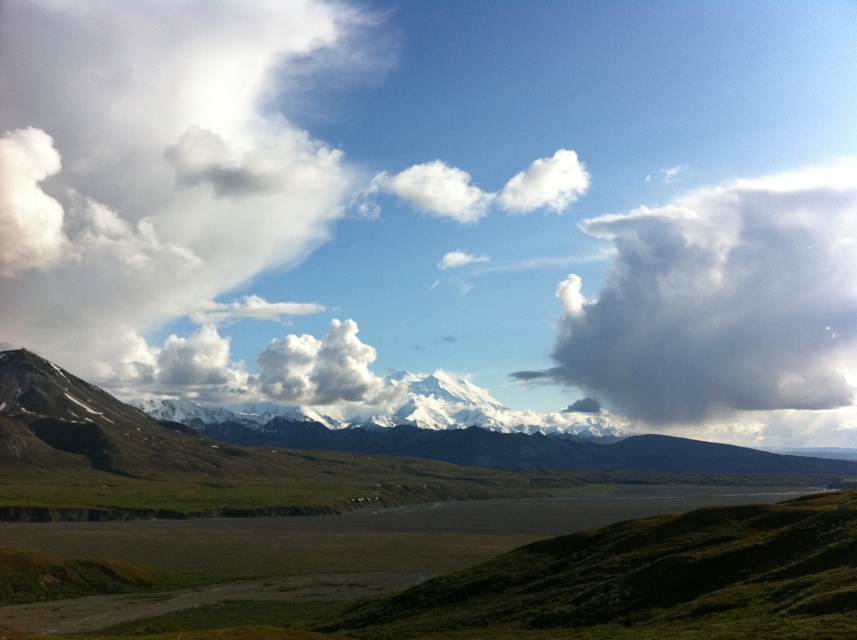
Starting at Wonder Lake (elevation 1,800 feet) we started on the flat , 85 miles from the nearest paved road, 45 horizontal miles, and 18,000 vertical feet from the summit. We started hiking around 10pm on June 16th in trail runners, plastic boots hanging off the outside of our gargantuan backpacks. We had some cold weather gear, snow floatation and 16 days of food inserted by helicopter (most teams use a dogsled to deposit this cache) waiting for us at McGonagall pass, 22 miles of backpacking south of the lake. Still my pack weighed in at 71 pounds and the hike to the pass was definitely physical. We crossed the McKinley bar river at 7am June 17th in hip deep, ice cold water. The crossing took about 3 hours and I’ve never had the screaming barfies so badly in my feet. In review, our team felt like the crossing was just barely within our risk tolerance, we were grateful for every cfm the river dropped the night before we crossed. The remaining hike to the pass was largely straightforward, and tremendously enjoyable The have been a number of parties up the route this year, and a defacto trail has worn into the taiga, allowing us to make the pass in just 2 days. We had outstanding sunny weather, great views of the mountains, and a solid time getting to know each other. The mosquitos were authentically thick, but spirits stayed high and standing on top of McGonagall pass is one of the most beautiful places I have ever been.
We found our cache perfectly placed on the glacial moraine, and we spent several hours sorting the 500+lbs of food and gear into sled loads. We used kiddy sleds to make the backpack loads more manageable, and June 18th we single carried all our gear to a camp below the lower icefall.

20110701-051208.jpg

20110701-051134.jpg

20110701-051150.jpg

The Past 30 days

The last 30 days have been very full to say the least. Certainly the climbing experience has been unique, incredible, and challenging, but the opportunities for personal growth and lessons learned from an incredible group of men have rounded out the time with plenty of writing to share. The following entries describe our climb in sections of the route- and between sections I’ll be posted some account of my thoughts and reflections from another incredible trip in the Alaska range.
I’ve been writing solely on my iPhone, so please excuse typos and punctuation errors, entries are time consuming enough just to get down in a digital format. I’ve been able to create posts on my iPhone while climbing and include some photos, but will try to post more photos from my teammates once I get to a computer. I have very little time in between trips, so I apologize for the barrage of posts in a short window! As always, thanks for following.

20110701-043459.jpg